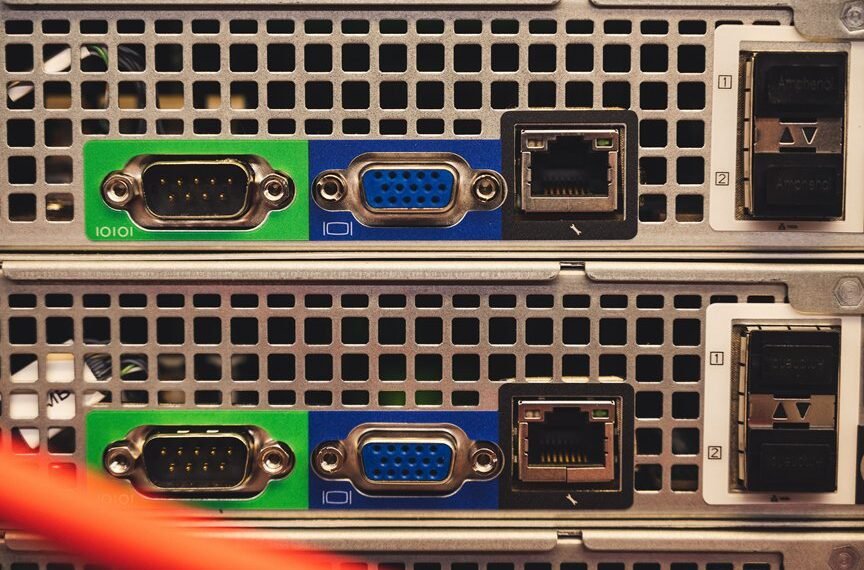
The 255.113.138 address serves as a network identifier with routing and ownership implications. Geolocation maps it to a regional allocation via registry data, with observed routing and timing data shaping confidence. The guide emphasizes privacy, minimal data collection, and auditable methods to support reproducible results. Practical steps balance transparency with caution about uncertainty. The discussion ends at a point where method and provenance matter as much as the inferred location, inviting careful scrutiny of the approach and its limits.
What an IP Address Reveals About 255.113.138
An IP address such as 255.113.138 represents a numerical label used to identify a device on a network. It delineates IP ownership, guiding network routing and ISP attribution, while exposing privacy implications.
Data anonymization and device fingerprinting interplay with geolocation accuracy, informing data retention decisions. Users value freedom, yet exposure prompts caution regarding tracing, logging, and persistent identifiers across sessions.
How IP Geolocation Works and Its Limits
Geolocation by IP relies on mapping a numeric address to a geographic region through a layered data framework, combining registry data, routing information, and observed user behavior.
IP address correlations emerge from public registries, ISP assignments, and network topology, yielding geolocation results with measurable uncertainty.
Privacy limits, data accuracy, and demographic variance constrain reliability, guiding cautious interpretation for freedom-seeking researchers.
Practical Steps for Lookup and Privacy‑Aware Research
To operationalize IP address lookup while respecting user privacy, this section outlines a sequence of practical steps, data checks, and methodological safeguards.
Researchers should implement privacy concerns by documenting provenance, limiting data collection, and auditing access.
Emphasize data minimization, avoid unnecessary storage, perform periodic reviews, and segregate datasets.
Protocols should remain transparent, reproducible, and auditable while enabling rigorous, freedom-minded inquiry.
Interpreting Results: What You Can and Can’t Conclude About the User
What conclusions can be drawn from IP address-derived signals about a user, and what remain inherently uncertain? Interpreting results reveals approximate geography, network ownership, and device-agnostic patterns, but exact identity, real-time activity, and personal attributes remain uncertain. Conclusions must respect privacy considerations, avoiding overreach; correlations may be incidental. Methodical interpretation emphasizes limitations, error margins, and corroborating data rather than definitive claims about the user.
Frequently Asked Questions
Can IPS Reveal the User’s Exact Identity?
IPs cannot reveal the user’s exact identity alone. They identify approximate location and network usage; privacy concerns arise from data-sharing. Data accuracy varies due to proxies, VPNs, and ISP practices, necessitating caution in interpreting identifiers and safeguarding personal information.
How Often Do IP Geolocations Update?
Geolocation drift occurs gradually; on average, IP address changes and associated accuracy shift monthly to quarterly. A notable statistic shows about 5–10% of users experience detectable drift annually. Precision remains dependent on ISP and routing dynamics.
Do VPNS or Proxies Affect Lookup Accuracy?
VPNs and proxies can affect lookup accuracy; results may shift due to IP sharing, exit node variability, and geolocation databases. VPN performance fluctuations and Proxy anonymity strategies influence precision, reliability, and perceived location.
Can IP 255.113.138 Indicate a Corporate Network?
An IP 255.113.138 alone does not conclusively indicate a corporate network; it may reflect private addressing, misconfiguration, or routing artifacts. IP privacy considerations and network architecture analysis are required to assess ownership and scope precisely.
What Legal Considerations Govern IP Data Usage?
Legal considerations govern ip data usage, requiring strict compliance with applicable laws and contracts. The detached reviewer notes that legal compliance and data privacy protections shape collection, processing, storage, and sharing practices, ensuring transparency, security, and accountability for freedom-seeking analyses.
Conclusion
In a quiet harbor, an IP address stands as a lighthouse beacon: it marks a location on the map but does not reveal the ship’s cargo, crew, or voyage. The beam guides researchers toward registries and routing patterns, not the person aboard. Precision requires careful provenance and caveats, not certainty. Like weathering wind and fog, geolocation yields probabilistic receipts, demanding auditable methods and humility about what remains unknowable. The shore is known; the voyage is not.